I. Introduction
The birth of Siddhartha Gautama, later the Buddha, is celebrated as a sacred event in Buddhist tradition. It marks the beginning of a life destined to bring enlightenment to the world.
II. Queen Mahāmāyā’s Dream
Queen Mahāmāyā, wife of King Suddhodana, dreamt of a majestic white elephant carrying a lotus flower. The elephant entered her side, symbolizing purity, wisdom, and the coming of a great being destined for Buddhahood. This dream was interpreted by sages as a sign that she would give birth to a child who would become a supreme teacher.
III. Before Birth Story
Auspicious signs appeared throughout Kapilavastu before the birth. Celestial beings rejoiced, flowers bloomed out of season, and sages foretold the arrival of a child who would bring compassion and wisdom to the world. The kingdom prepared with reverence for this extraordinary event.
IV. Birth at Lumbini
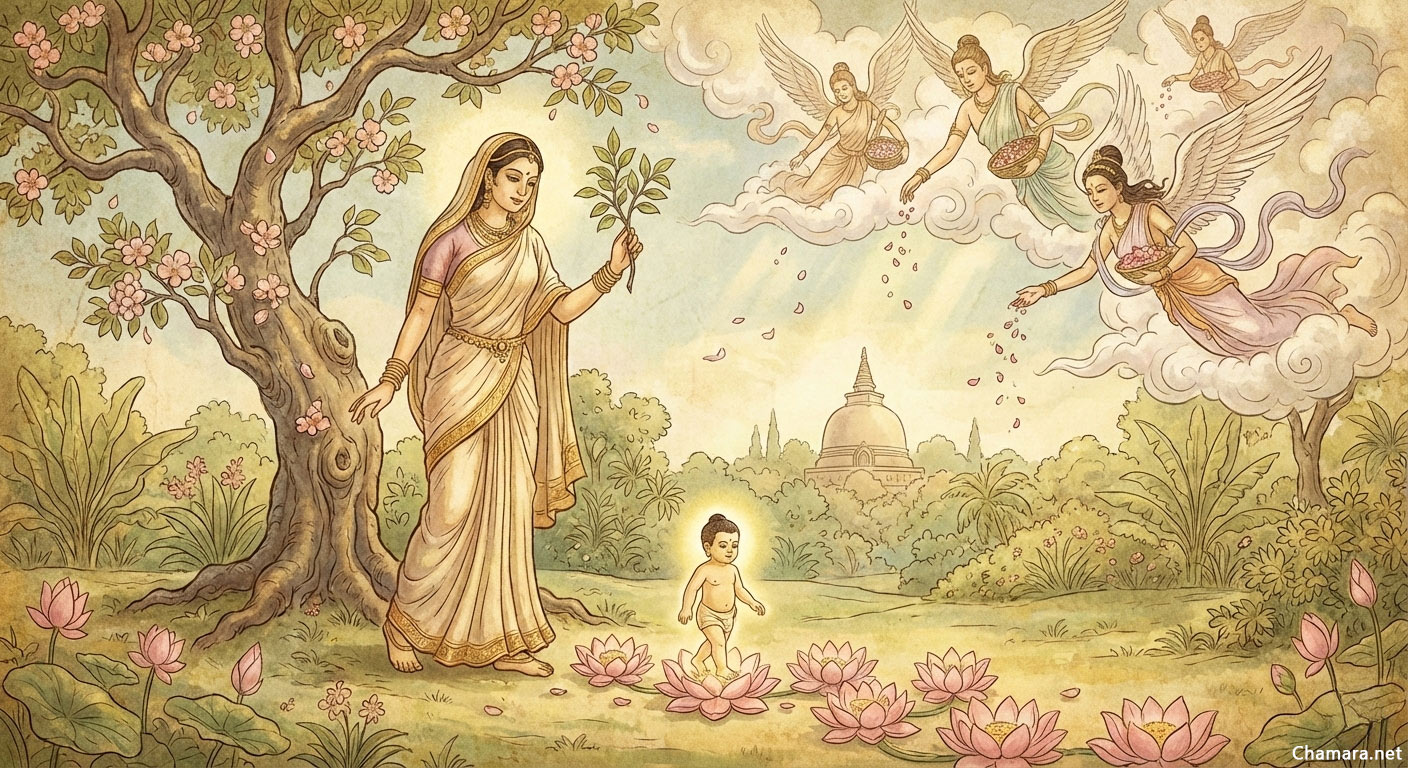
On her journey to her parental home, Queen Mahāmāyā stopped at the Lumbini Garden. While standing beneath a sal tree and holding a branch, she gave birth to Siddhartha Gautama. The child is said to have taken seven steps immediately after birth, declaring his destiny to end suffering and bring enlightenment to all beings.
V. Cultural Depictions
The Buddha’s birth is a central theme in Buddhist art and ritual. Murals, sculptures, and Vesak celebrations across Asia depict Queen Mahāmāyā under the sal tree, surrounded by celestial beings. This imagery continues to inspire devotion and reflection in Buddhist communities worldwide.
VI. Symbolism
The white elephant dream and miraculous birth symbolize purity, compassion, and wisdom. They affirm the Buddha’s unique destiny to bring enlightenment to all beings, and remind practitioners of the sacredness of life and the potential for awakening within everyone.